


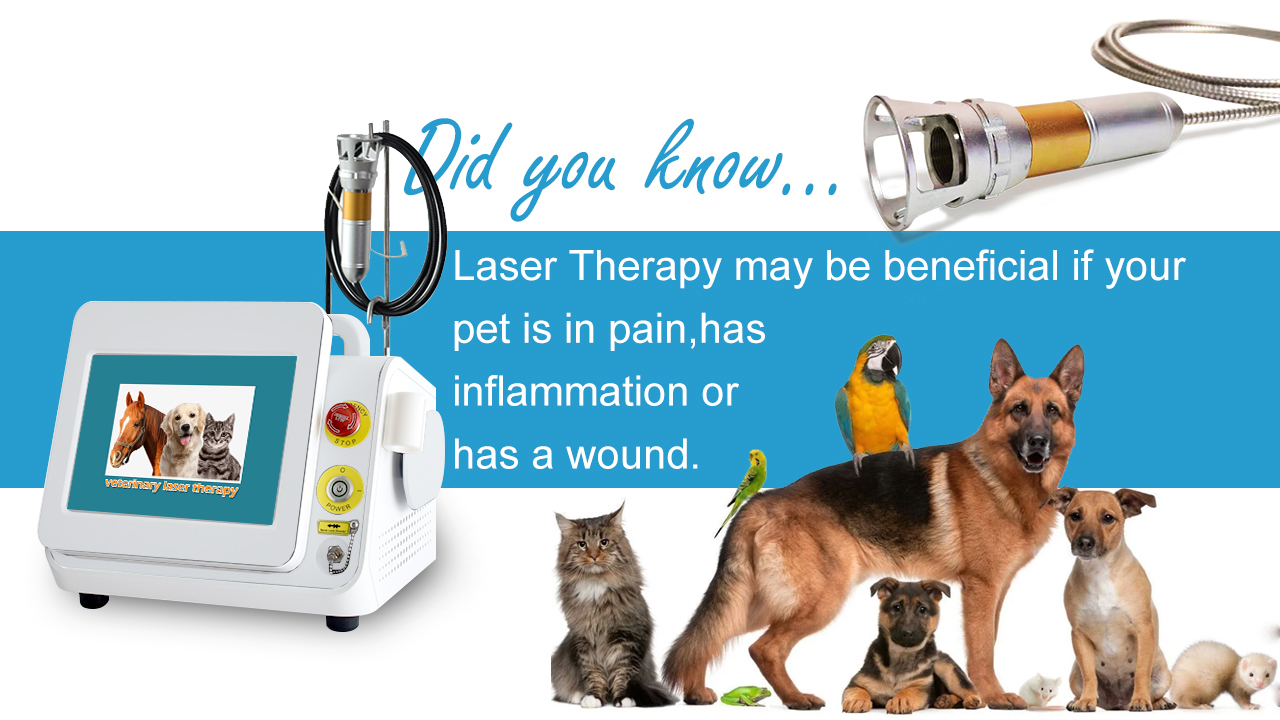


Veterinary Laser Therapy Machine
Veterinary laser therapy—also known as photobiomodulation (PBM) or low-level laser therapy (LLLT)—is a scientifically backed, non-invasive treatment modality used to accelerate healing, reduce pain and inflammation, and improve mobility in animals. Modern veterinary laser therapy machines deliver specific wavelengths of light (typically in the 600–1000nm range) to stimulate cellular function without generating heat or causing tissue damage.
Common Clinical Applications in Veterinary Medicine:
*Osteoarthritis & joint pain (e.g., hip dysplasia, elbow dysplasia)
*Post-surgical recovery (e.g., after TPLO, spay/neuter, dental extractions)
*Soft tissue injuries: sprains, strains, tendonitis, ligament tears
*Wound healing: lacerations, abrasions, surgical incisions, hot spots
*Dermatological conditions: lick granulomas, allergic dermatitis, otitis
*Neurological rehabilitation: intervertebral disc disease (IVDD), nerve injuries
*Dental applications: gingivitis, stomatitis, post-extraction healing
Class IV (High-Power Therapeutic Lasers):
*Power: 1W to 15W+
*Deeper tissue penetration (up to 5–8 cm)
*Shorter treatment sessions (often 3–10 minutes per site)
*Most commonly used in modern veterinary practices
Common Wavelengths:
*980nm – optimal for deep tissue penetration and cellular absorption
Key Benefits for Clinics and Pet Owners:
✅ Drug-free pain management – reduces reliance on NSAIDs or opioids
✅ Faster recovery times – shortens post-op healing by up to 30–50%
✅ Non-invasive & stress-free – most animals relax during treatment
✅ No known side effects when used properly
✅ Revenue-generating service – high client acceptance and repeat visits
✅ Versatile – effective for dogs, cats, horses, rabbits, and even exotic pets
Modern Features in Veterinary Laser Systems:
*Touchscreen interface with preset protocols (by species, condition, and weight)
*Dual-wavelength or multi-diode arrays for enhanced efficacy
*Contact or non-contact applicator heads
*Dose tracking and treatment history logging
*Portable or cart-mounted designs for in-clinic and mobile use
With growing evidence supporting its efficacy and increasing demand from pet owners for integrative care, veterinary laser therapy has become a standard of care in progressive animal hospitals and rehabilitation centers worldwide.
